
Heroll : Dice Roguelike
111%Casual
4.62.55K Reviews
- Version
- 2.0.3
- Installs
- 1.00M
- Age Rating
- Everyone 10+
Screenshots




Our Review of Heroll : Dice Roguelike
 Analysis by Appyee
When I think about whether a mobile game works for different people and everyday situations, I look beyond its premise: can I follow what is happening, make choices without awkward input, and enjoy a session when I do not have ideal conditions? Heroll: Dice Roguelike is a casual dice-based dungeon game from 111%, and its turn-by-turn decisions give it a more thoughtful feel than a game built purely around quick reflexes. That is a useful starting point for players who want a compact adventure, though the dice theme and pixel presentation will not suit everyone.
Following the action on a small screen
The visual style is deliberately pixelated, with colorful characters and different-looking environments. That gives the game a distinct personality, but retro art can also make small objects and enemies harder to distinguish on a phone than on a larger screen. I would take a moment at the start of a run to learn which visual cues matter in a choice or encounter, rather than tapping through quickly. A clear mental picture of the current situation matters here because each roll can affect what happens next.
The central loop is easy to explain: roll, respond to the result, and decide how to proceed through a dungeon. That simple structure helps a new player understand the broad idea without needing to learn a complicated control scheme first. The strategic layer takes longer to absorb, especially when weapons, skills, resources, and risk all come into play. I found it more approachable when I treated early runs as practice in recognizing consequences, not as attempts to make every decision perfectly.
Navigation is most comfortable when I give the screen my attention. This is not a game I would choose while trying to read messages, cross a busy space, or follow a conversation at the same time: the choices are not necessarily demanding in speed, but missing the context around a roll can make a decision feel arbitrary. If you like games that let you pause mentally between decisions and think through a risk, that measured rhythm is a strength. If you want an experience you can operate almost entirely by instinct, it may feel more involved than its casual label suggests.
Dice, decisions, and the feel of play
Randomness is the hook, but it is also the main trade-off. A run can bring an appealing weapon or a difficult enemy, and the unpredictable sequence gives repeat attempts variety. At the same time, planning cannot guarantee a favorable result. I enjoy that tension when I can adjust my approach, but players who prefer tightly controlled outcomes may find the luck element frustrating, particularly when a run turns against them after careful choices.
The useful skill is not simply choosing the boldest option. I try to weigh the value of pushing for more loot against the possibility of making the rest of a run harder. That habit makes the risk feel deliberate rather than random, and it is a practical way to get more from the game without needing an elaborate strategy guide. Weapons and skills also encourage experimentation: a piece of equipment that changes how I handle a situation can make a cautious approach more attractive, while another reward may tempt me to accept a bigger risk.
Because the game is organized around dice rolls and decisions, it is a reasonable fit for someone who wants a game with less emphasis on precise, continuous movement. That does not mean every player will find the controls comfortable, and I would not assume that a turn-based rhythm automatically removes all motor or visual barriers. The pixel art, the need to inspect choices, and the attention required to track a run can still be tiring. If those demands are a concern, trying a short session in a comfortable setting is a better test than relying on the genre label.
Where it fits into an ordinary day
I can picture playing a run during a quiet break at home, with enough time to consider whether to risk another reward or head for the exit. It is also suited to a relaxed evening when I want a small adventure rather than a long, dialogue-heavy role-playing game. The important distinction is that a run asks for attention even when the pace feels manageable. I would not count on it as a background distraction while doing something that already needs focus.
Compared with a straightforward casual game built around repeating one quick action, this offers more room for planning and adapting to what a run produces. Compared with a traditional tabletop role-playing session, it is much easier to start alone on a phone, but it does not replace the social improvisation and shared storytelling of a group around a table. Players looking for a deep narrative or the freedom to invent their own character’s role may be happier with a larger role-playing game. Those who want short-form decisions, dungeon danger, and a little luck are closer to its intended audience.
A sensible way to approach it is to focus on one decision at a time: check what a roll or reward could change, consider the resources you still need, then decide whether the possible gain is worth the exposure. That small pause is more useful than trying to memorize every possible outcome. It also helps separate a disappointing result from a bad choice; sometimes the dice simply do not cooperate, and the appeal is seeing how you respond rather than controlling everything.
Who may want to look elsewhere
This is a better match for players who enjoy replaying a familiar framework with different combinations than for someone who needs a carefully authored story to carry every session. The changing runs provide variety, but randomness can make progress feel uneven. If you dislike starting over after a setback, or want every attempt to reward the same careful plan, the roguelike structure may wear thin. Likewise, the game is not my first recommendation for people seeking a calm, purely decorative puzzle: its dungeon encounters and risk choices give it a more adventurous edge.
Heroll is free to play, with optional in-app purchases priced from $0.99 to $69.99 per item. That range is worth keeping in mind before spending: I would begin by playing without buying anything and decide only later whether an available purchase would genuinely improve my own experience. The game is rated Everyone 10+, so it is aimed at a broad audience while carrying that age guidance. It has a 4.7 average from around 63,000 ratings and more than a million installs, which suggests it has found an audience, though popularity alone cannot tell you whether its dice-driven rhythm will suit you.
Rolling into Adventure
Jumping into Heroll: Dice Roguelike is like cracking open a new board game. You’re greeted with a charming, pixelated world that’s just begging to be explored. The premise is simple: you roll dice to navigate through dungeons and take on various enemies. But don’t let the simplicity fool you; this game has layers.
Each roll determines your fate. Will you gain a powerful weapon, or will you face a fearsome monster? It’s all about strategy and a bit of luck, which keeps things exciting and unpredictable. What I love is that no two runs are the same, so it’s always fresh.
Gameplay Mechanics
The game revolves around dice rolls, obviously, but there’s more to it. You’ve got to think ahead, plan your moves, and manage your resources wisely. Your character progresses through randomly generated levels, encountering enemies, traps, and treasures. Each decision can be a matter of life and death. Should you push your luck for that extra loot or play it safe and head for the exit?
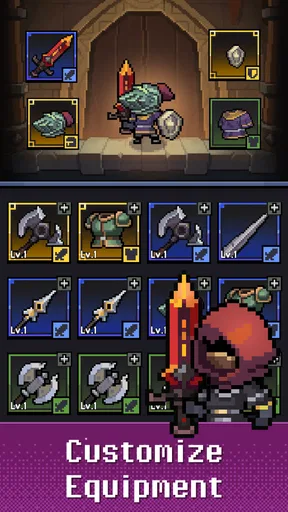
What really stands out is the array of skills and weapons you can collect. These aren’t just for show; they significantly impact how you approach each dungeon. Maybe you’ll find a sword that gives you extra rolls, or a shield that blocks a nasty attack. The variety keeps you on your toes and encourages experimentation.
Visuals and Sound
The graphics are a delightful throwback to the classic 8-bit style, with vibrant colors and quirky character designs. It’s retro in all the right ways, capturing that nostalgic feel while keeping things modern. The sound effects and music are spot on, adding a layer of immersion that pulls you deeper into the adventure.
Each level has its own unique vibe, from eerie caves to lush forests. The attention to detail in the environments is impressive, making each run feel like a new chapter in your adventure.
Why It Stands Out
One of the standout features is how accessible it is. Whether you’re a die-hard roguelike fan or just dipping your toes into the genre, Heroll: Dice Roguelike doesn’t overwhelm you. The tutorial is straightforward, and the learning curve is just right. You’ll find yourself getting better with each run, which is incredibly satisfying.
Another point worth mentioning is the community. There’s a ton of online forums and discussion groups where players share tips, tricks, and strategies. It’s a great way to connect with fellow adventurers and make the game even more enjoyable.
The Final Roll
All in all, Heroll: Dice Roguelike is a gem of a game that offers countless hours of fun. It’s got that perfect blend of strategy, excitement, and unpredictability that makes roguelikes so addictive. Whether you’re in it for a quick session or a marathon gaming spree, this app has got you covered.
If you’re ready to embark on a pixelated journey full of dice rolls and daring adventures, download Heroll: Dice Roguelike and see where the dice take you. Trust me, it’s a roll worth taking!
Availability and a practical starting point
The game was released on February 20, 2025, and its current version is 1.6.2. It requires Android 7.0 or later. I would check that compatibility before installing, especially if you are using an older device, and make sure the screen is comfortable to view during a longer run. Since the game mixes retro visuals with tactical choices, a bright, steady setting can make it easier to distinguish the action than playing in a hurry or in poor light.
111% places it in the casual game space, but I would describe its appeal as more thoughtful than a typical pick-up-and-tap diversion. It rewards attention to the consequences of a roll, yet it does not demand the social commitment of a tabletop campaign. That middle ground is useful for a solo player who wants some of the risk-and-reward feel of a dungeon crawl without arranging a group. If your ideal casual game is something you can ignore for a moment and return to without losing track, a simpler one-action game may be a better fit.
The store summary marks a first-anniversary festival, which gives the game a celebratory frame, but my recommendation rests more on the core loop than on a seasonal message. When deciding whether to keep playing, I would ask whether the changing combinations of rolls, enemies, and equipment make me curious about another attempt. If they do, the loop has room to hold attention. If the appeal fades once the basic dice mechanic is familiar, the festival framing alone is unlikely to change that.
An inclusive verdict, with sensible expectations
For players who enjoy turn-based thinking, pixel-art dungeons, and adapting when luck shifts, this is an inviting option to try. The short, decision-led rhythm can work well for a relaxed solo break, while the same need to track choices makes it less suitable for distracted play. I would recommend approaching it as a game of managing uncertainty, not as a puzzle with one reliably correct route. That expectation makes both a strong run and a disappointing roll easier to enjoy.
My main reservation is that “accessible” can mean different things: easy to understand, comfortable to operate, readable on a particular screen, or suitable for a particular sensory need. The straightforward premise helps with the first, but it does not guarantee the others. The pixel presentation and sound-led atmosphere may be appealing to some players and less comfortable for others. If you need specific visual, audio, or input accommodations, I would test the game in a short, low-pressure session before committing to longer play or a purchase.
Overall, I see Heroll: Dice Roguelike as a good choice for curious casual players who want a solo dungeon adventure with meaningful risk, and a less convincing choice for anyone who wants predictable outcomes, a narrative-first experience, or a game that demands almost no attention. Its strongest quality is how a simple roll can lead to a decision worth thinking about; its clearest limitation is that luck and small-screen presentation will not suit every player. Start free, take a few runs at your own pace, and keep playing only if adapting to the dice feels enjoyable rather than frustrating.
Verdict
Strengths of Heroll : Dice Roguelike
- Unique dice mechanics add strategic depth.
- Engaging roguelike elements for replayability.
- Visually appealing with a charming art style.
- Easy to learn, hard to master gameplay.
- Frequent updates with new content.
Limitations of Heroll : Dice Roguelike
- Can be challenging for casual players.
- In-app purchases may affect gameplay balance.
- Limited character customization options.
- Requires a stable internet connection.
- Occasional bugs in certain levels.
Other Releases by 111%
View All
Lucky Defense
Casual4.3
Similar Picks in This Category
View All
My Talking Angela
Outfit7 Limited4.2

My Talking Tom
Outfit7 Limited4.3

Pou
Zakeh4.2

My Talking Tom 2: Pet Game
Outfit7 Limited4.3

Candy Crush Saga
King4.6

Bridge Race
Supersonic Studios LTD4.1
Frequently Asked Questions
What is Heroll: Dice Roguelike about?
Heroll: Dice Roguelike is a strategic game that combines elements of roguelike adventures with dice mechanics. Players embark on a journey through procedurally generated levels, battling enemies using dice rolls. The game offers a unique blend of luck and strategy, requiring players to adapt their tactics based on the outcomes of each roll.
Is Heroll: Dice Roguelike available for both Android and iOS devices?
Yes, Heroll: Dice Roguelike is available for download on both Android and iOS platforms. Users can visit the Google Play Store for Android devices or the Apple App Store for iOS devices to download and install the game. Ensure your device meets the minimum system requirements for optimal performance.
Does Heroll: Dice Roguelike require an internet connection to play?
Heroll: Dice Roguelike can be played offline, making it a great option for users who wish to enjoy the game without needing an internet connection. However, some features, such as updates or certain in-game purchases, may require online access. Always check for the latest updates when connected to the internet.
Are there in-app purchases in Heroll: Dice Roguelike?
Yes, the game includes in-app purchases that offer players the ability to buy additional resources, power-ups, or premium features. These purchases can enhance the gaming experience but are not necessary to enjoy the core gameplay. Players can progress through the game without spending money, relying on skill and strategy instead.
What age rating is Heroll: Dice Roguelike suitable for?
Heroll: Dice Roguelike is generally suitable for players aged 9 and up, due to its mild fantasy violence and strategic gameplay elements. Parents are advised to review the game content and in-app purchase options to ensure it aligns with their expectations for age-appropriate gaming.
Play our best games!


